6 hr
Private Johannesburg & Soweto Apartheid History Tour
A 6-hour private journey through Soweto, Mandela House and the Apartheid Museum, led by a third-generation South African storyteller.
Reserve
Seven decades carved in concrete, one nation remembered.
Hand-picked by our editors — only the best 9 experiences from 740 reviewed.
Verified partners for Apartheid Museum tours, free cancellation where available, and instant confirmation on every booking.
6 hr
A 6-hour private journey through Soweto, Mandela House and the Apartheid Museum, led by a third-generation South African storyteller.
Reserve
5 hr
A moving 4.5-hour guided journey through Johannesburg's Apartheid Museum, with hotel pickup included.
Reserve
8 hr
Full-day journey through Johannesburg, Soweto and the Apartheid Museum with hotel pickup and lunch included.
Reserve
10 hr
Explore Joburg's history across a full day—Constitution Hill, the Apartheid Museum, and the streets of Soweto.
Reserve
8 hr
Full-day guided tour through Joburg's powerful history, from Constitution Hill to vibrant Soweto.
ReservePrices from verified partners. Availability updates in real time at checkout. Free cancellation policies apply where shown.
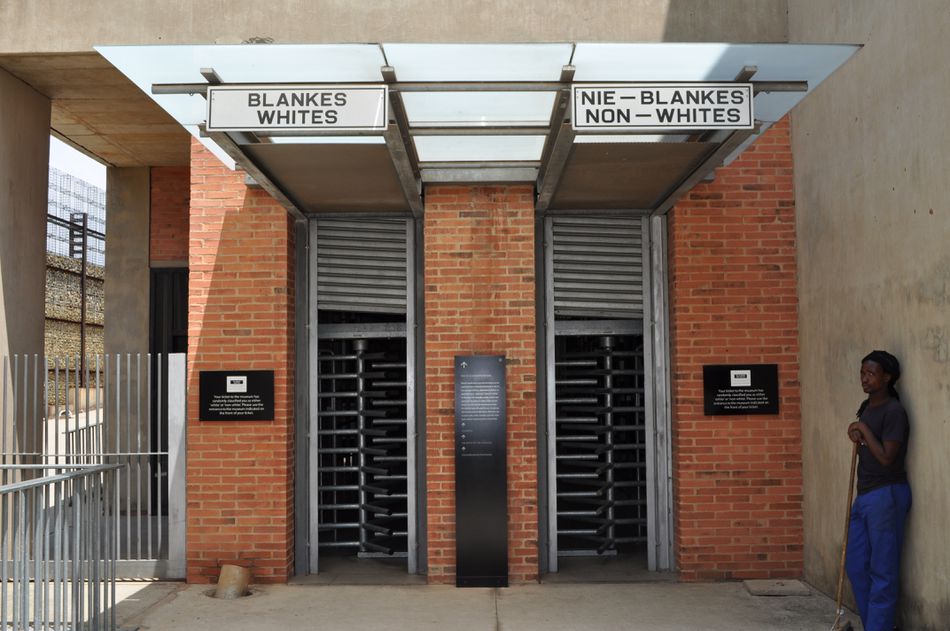
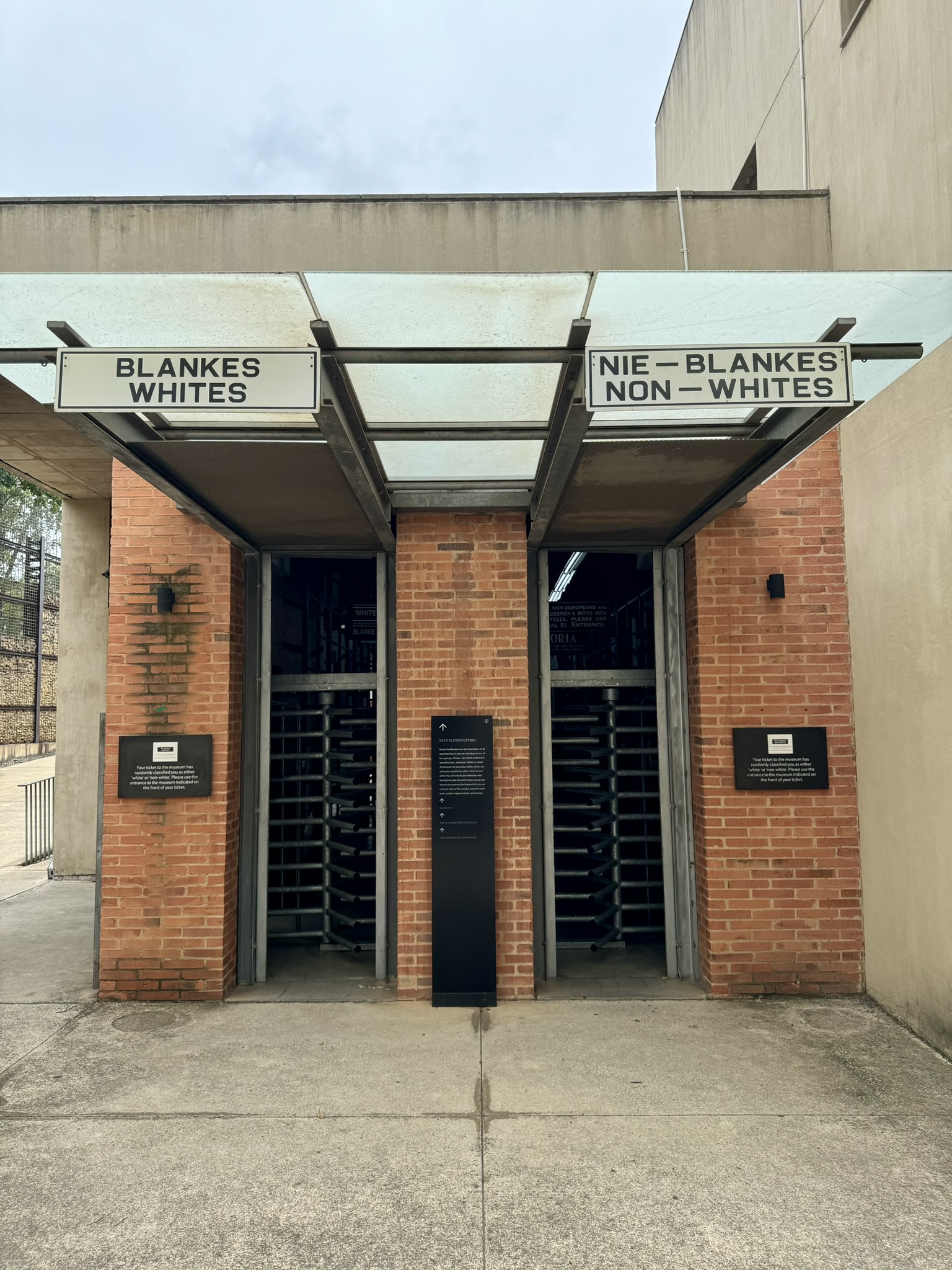
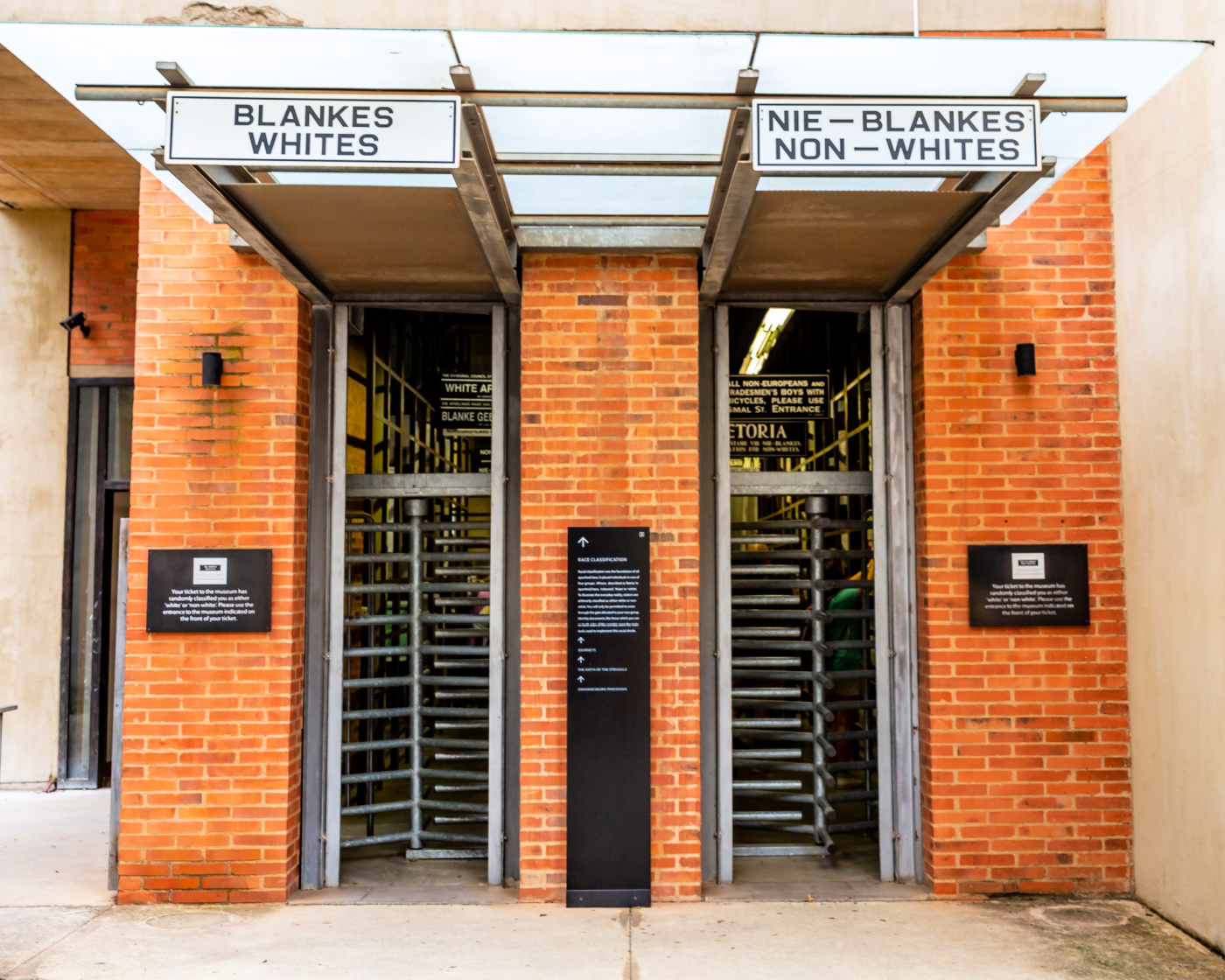
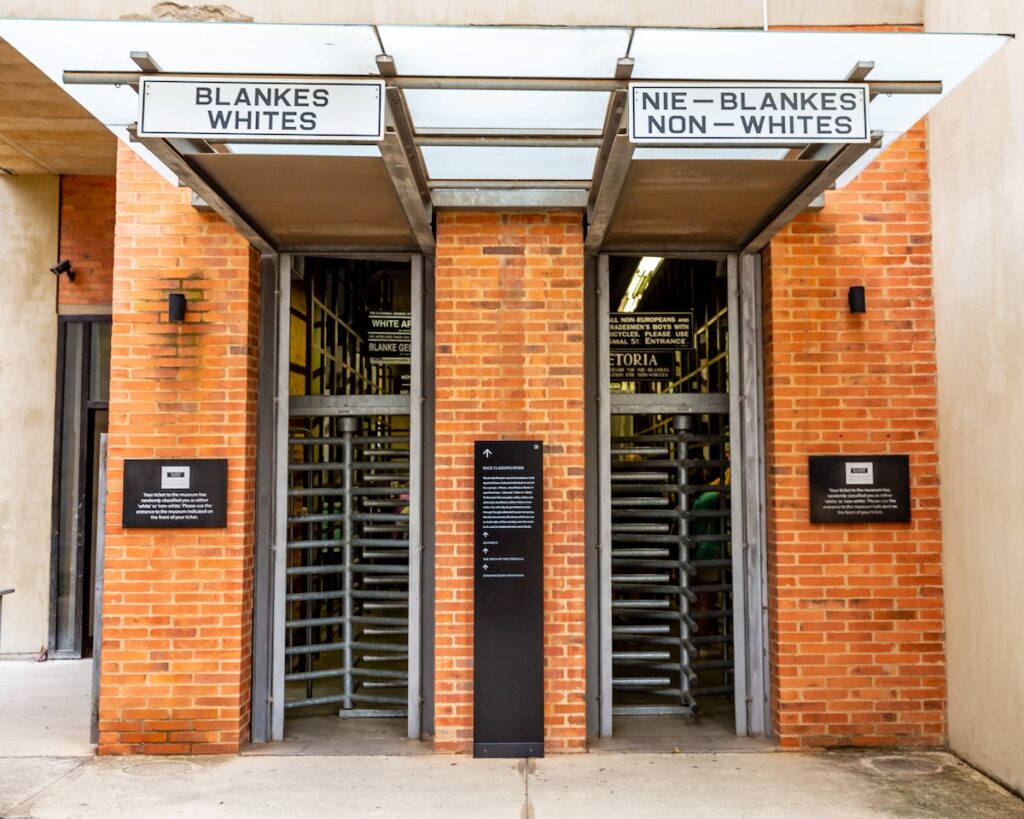
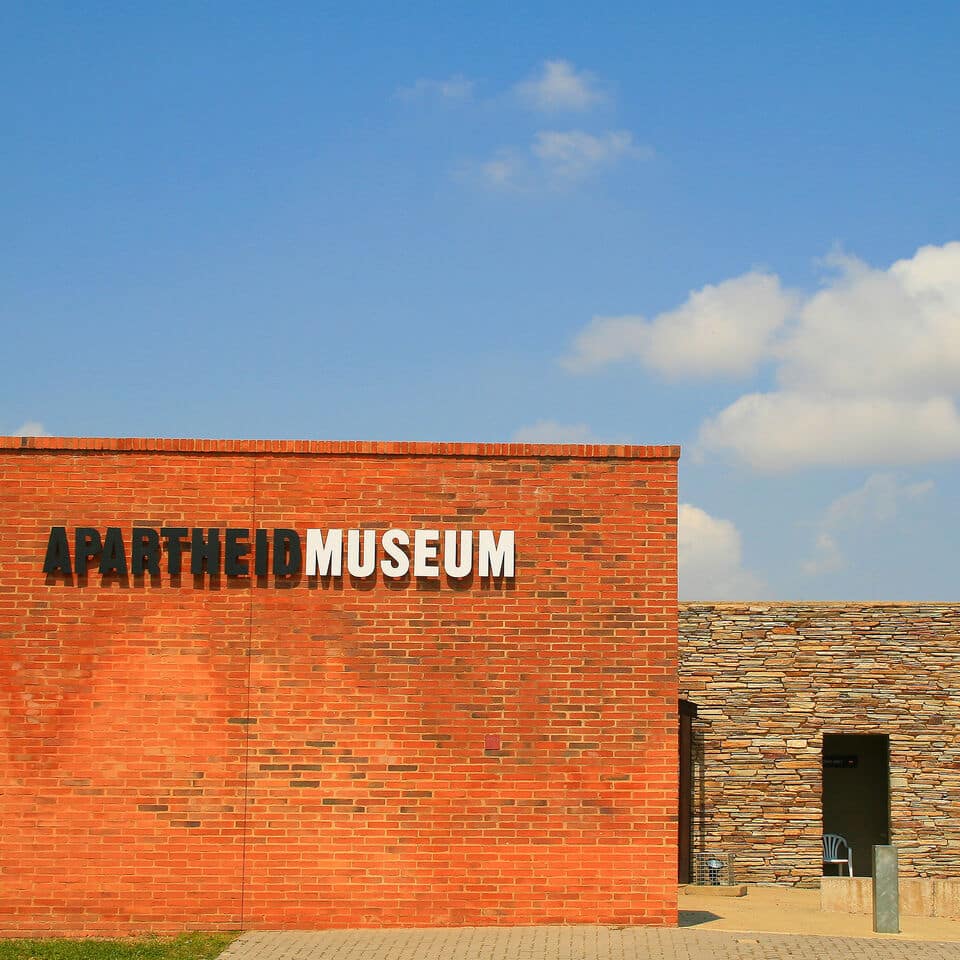
The apartheid museum issues each visitor a card at the entrance, randomly assigning them "white" or "non-white," routing them through separate gates. The detail is deliberate, and it sets the tone for everything inside.
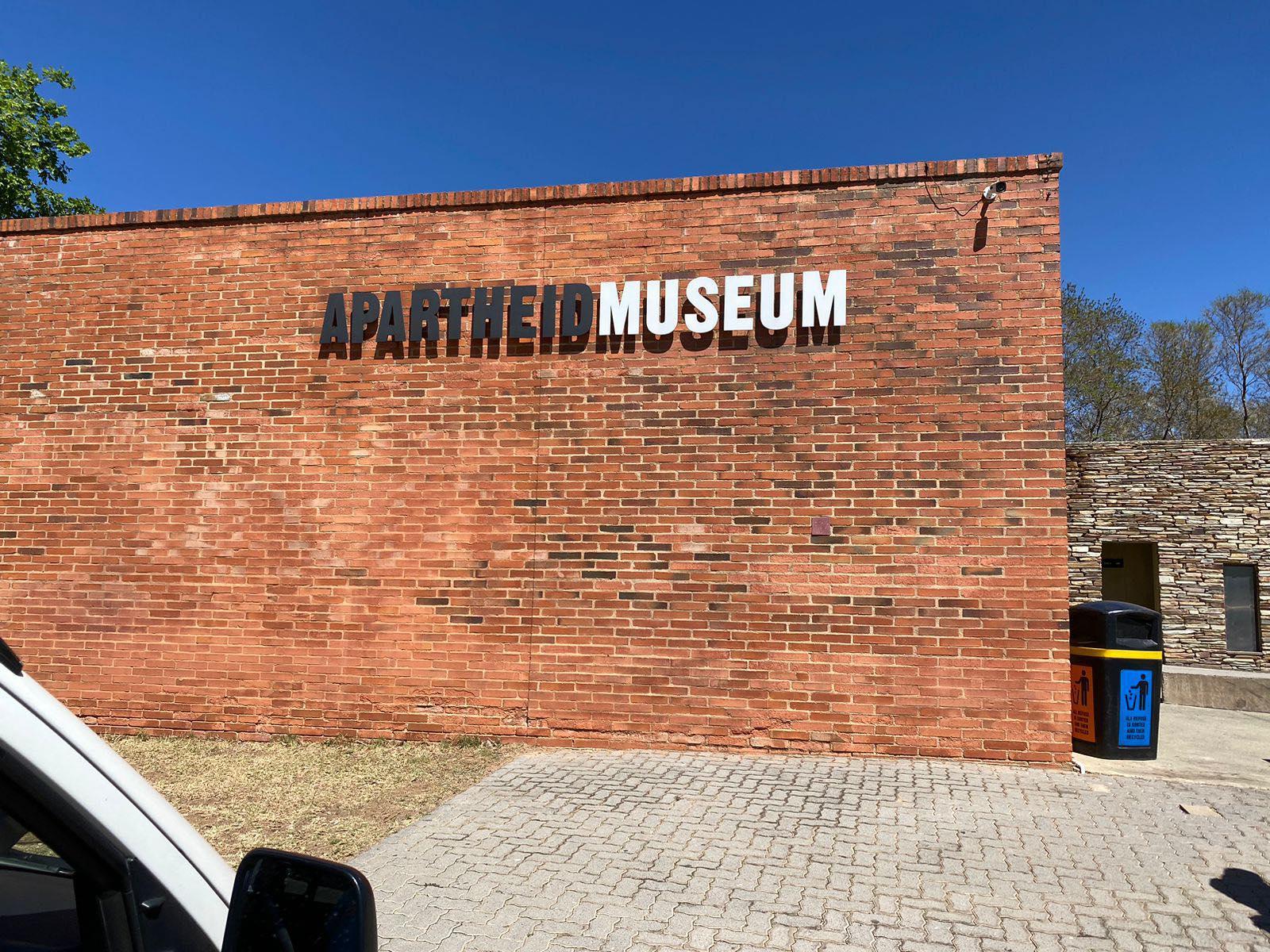
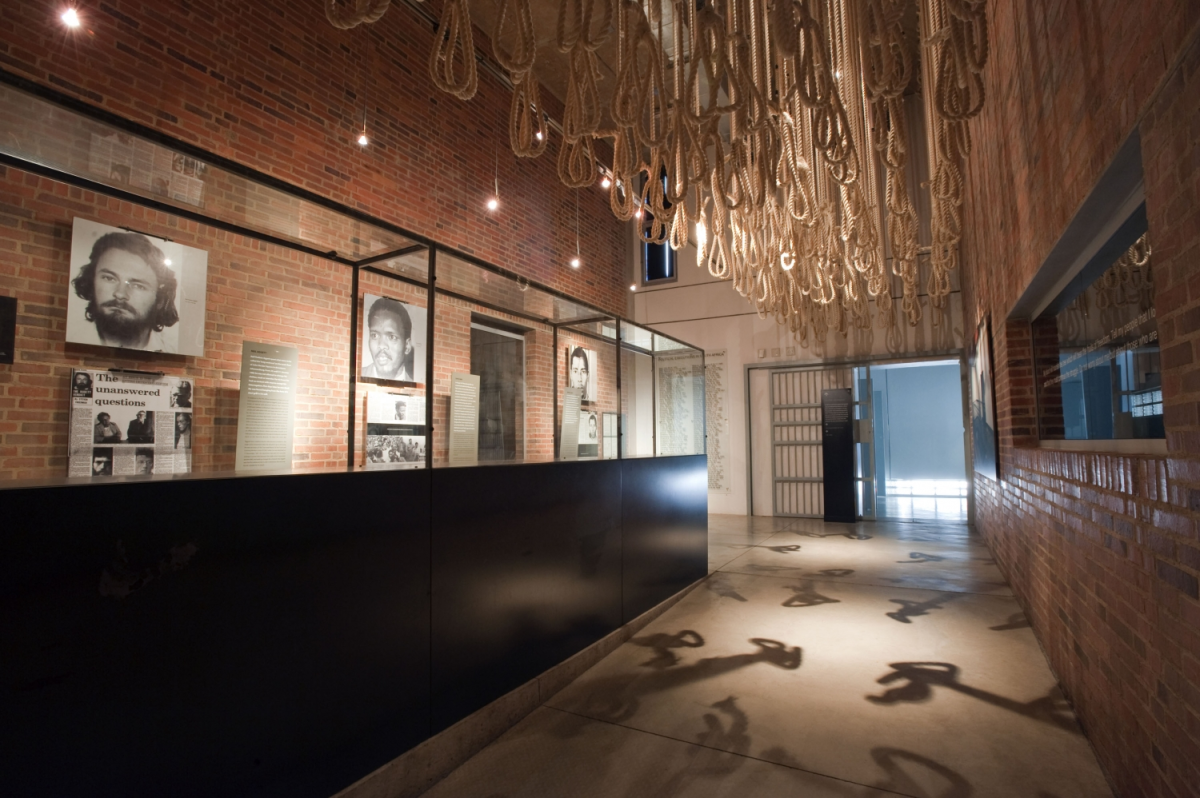
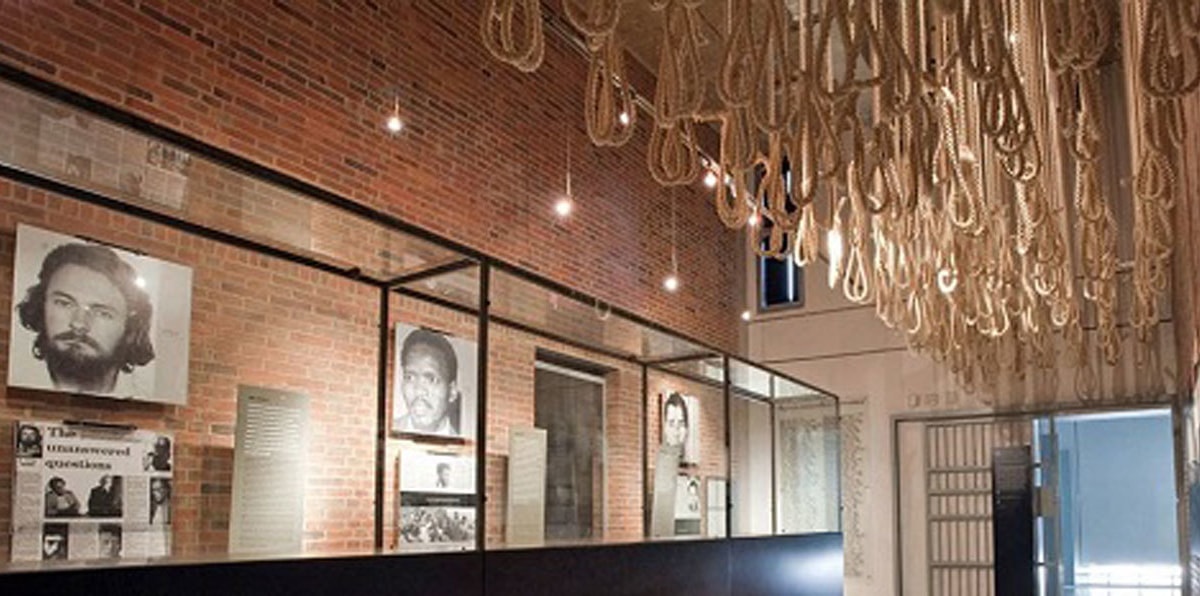
Opened in 2001 beside Gold Reef City, the museum traces South Africa's long arc from segregation laws to the 1994 election through twenty-two exhibition spaces, archival film, and 121 nooses suspended for political prisoners executed under the regime. A Johannesburg Soweto apartheid museum tour often pairs the building with the townships whose history it documents, while the apartheid museum guided tour adds context many visitors miss on their own. Whether you choose an apartheid museum soweto day tour or simply walk the ramps unaccompanied, the institution remains Johannesburg's most unflinching landmark — a place that asks what reconciliation actually costs.
"A card at the gate decides your race, and the museum begins before you reach the door."
A step-by-step walkthrough of Apartheid Museum tickets — what you'll see, how long each stage takes, and the details that matter.
You arrive at the corner of Northern Parkway and Gold Reef Roads around 09:00, when the doors open and the tour groups have not yet filled the ramps. You collect your audio guide, included in the 240 ZAR admission, and step through the gate your card assigns you.
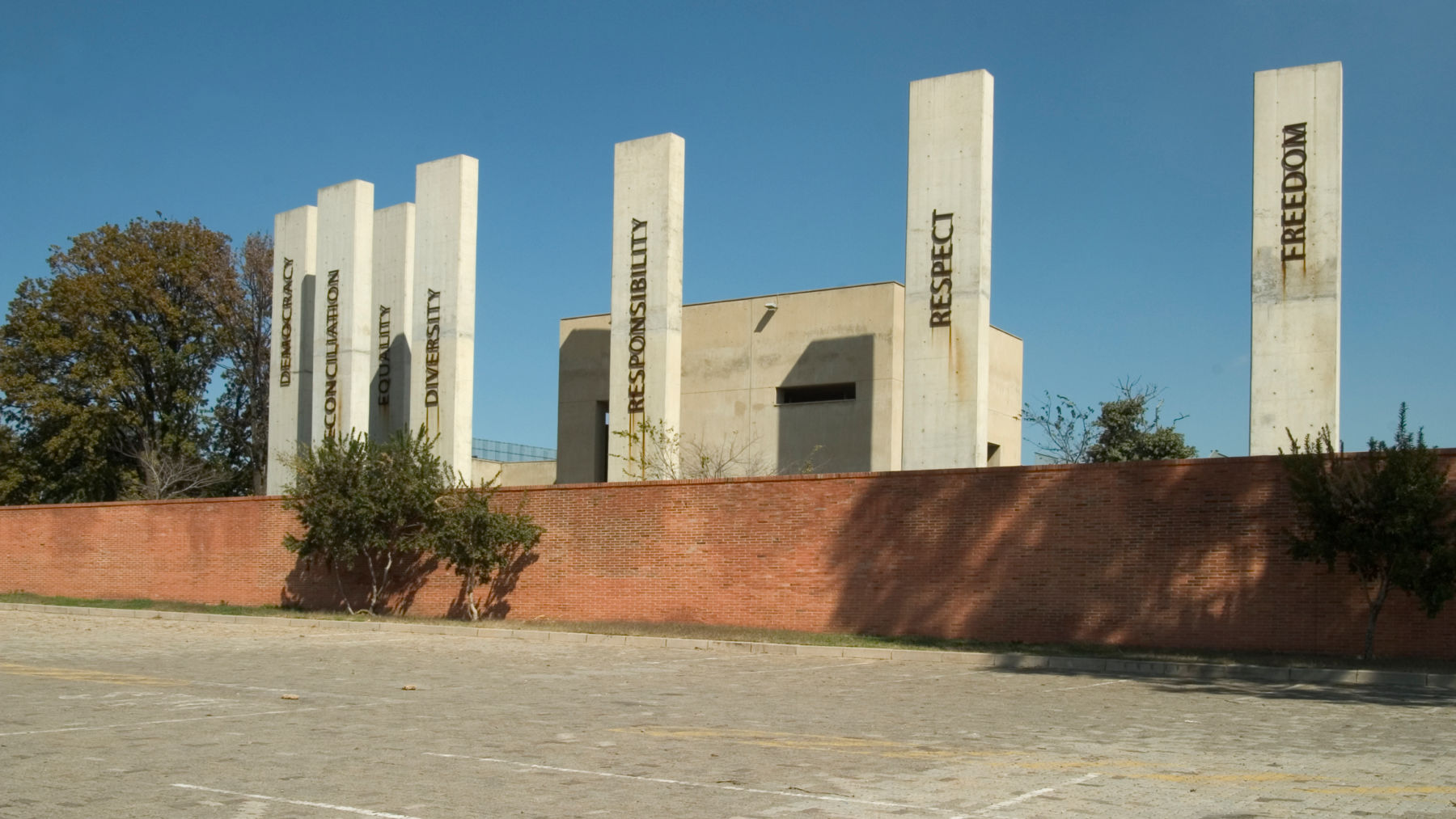
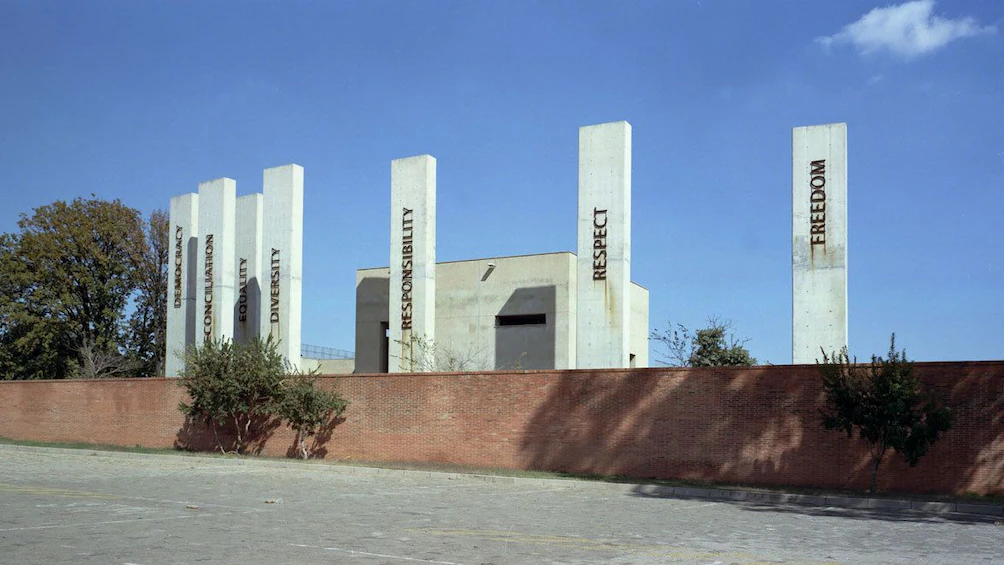
You move slowly past the pillars etched with the seven pillars of the constitution, then descend into the rooms tracing forced removals and the rise of resistance. You pause beneath the suspended nooses, count the names, and stand longer than you planned. A guided tour of the apartheid museum can fill the gaps, but the silence does most of the work. You leave through the garden, blinking into Johannesburg light, quieter than you came.
The landmarks, rooms, and views travelers on Apartheid Museum tours remember — all visible on a single visit.
Visitors are randomly issued either a 'White' or 'Non-White' ticket and directed through separate entrances, immediately recreating the daily reality of petty apartheid before a single exhibit has been viewed.
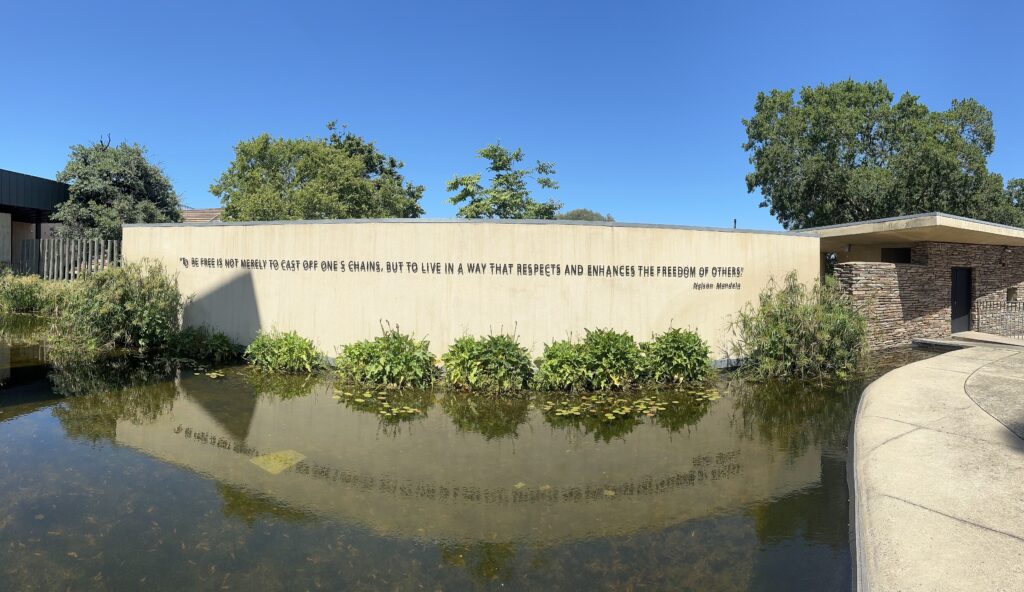
Seven tall concrete pillars inscribed with the seven foundational values of South Africa's 1996 constitution — democracy, equality, reconciliation, diversity, responsibility, respect, and freedom — stand in the open courtyard, bookending the darkness of the exhibition with a declaration of the country's aspirations.
The room's ceiling is hung with 131 individual hangman's nooses, one for each political prisoner executed by the apartheid state, creating an overwhelming visual record of state violence that many visitors describe as the most affecting space in the entire museum.
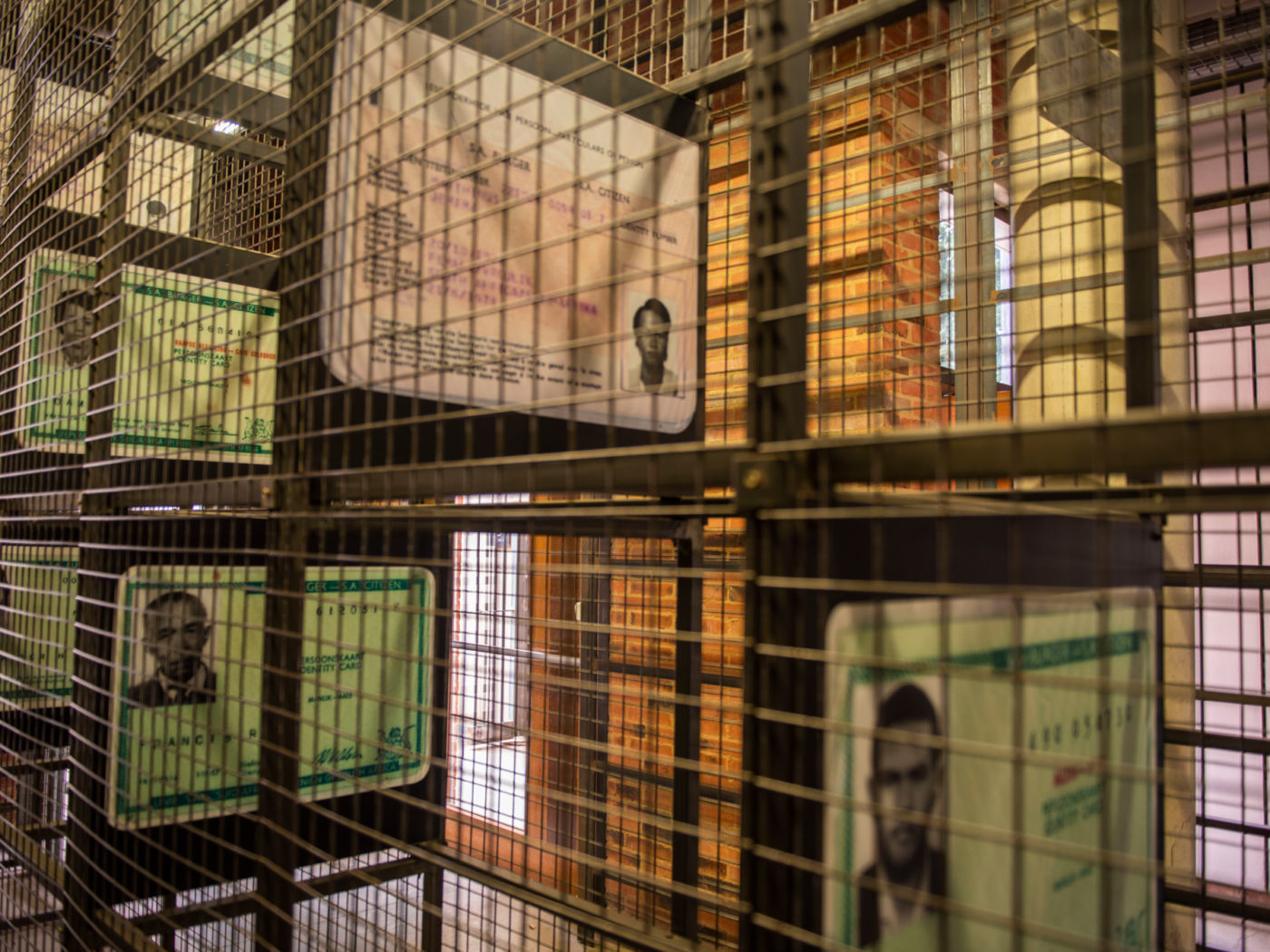
South Africa's apartheid bureaucracy classified every citizen into one of four racial groups — Native, White, Coloured, or Asian — and this exhibit displays the actual identity documents (dompas pass books) used to enforce those categories, alongside the Population Registration Act of 1950 that gave the system legal force.
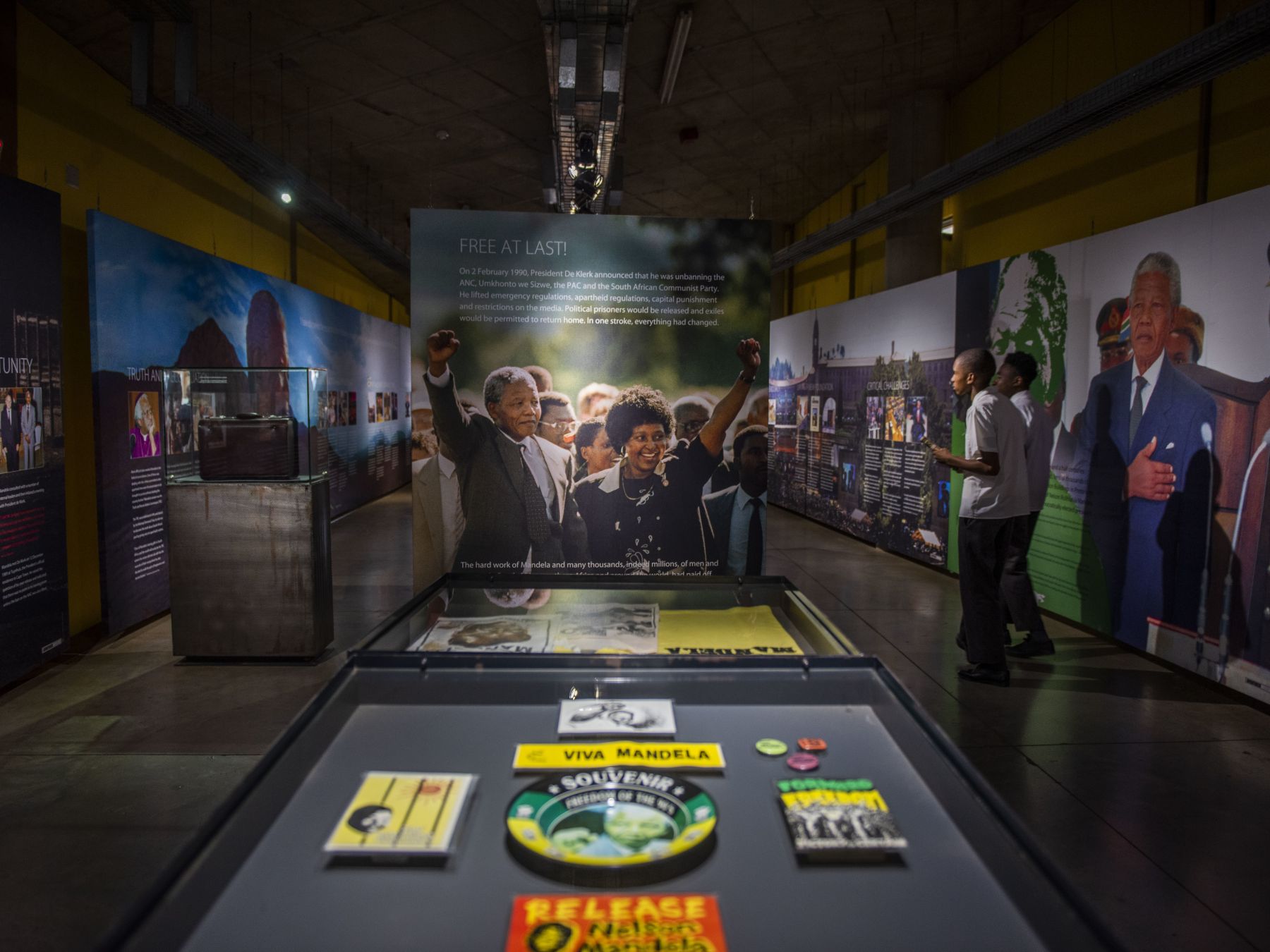
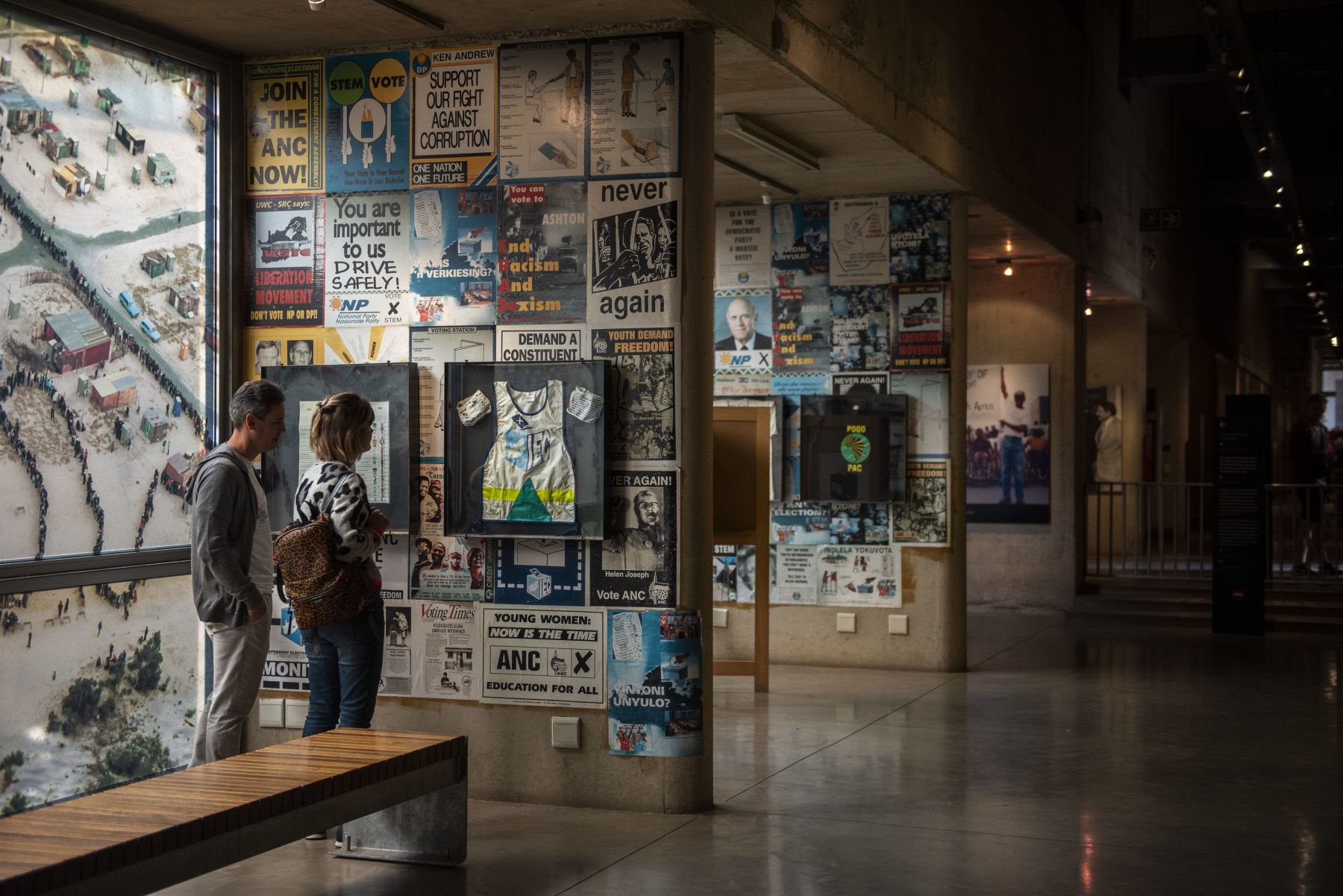
The final major gallery documents South Africa's first fully democratic elections of 27 April 1994, in which more than 19 million people voted for the first time, and charts Nelson Mandela's inauguration as president; after the preceding darkness of the exhibition, the hall functions as the museum's deliberate moment of resolution.
Every Apartheid Museum tour side-by-side — duration, what's included, how you redeem.
| Experience | From | Duration | Transfers | Pickup | Lunch | Tax inc. | Free cancel. | Price | |
|---|---|---|---|---|---|---|---|---|---|
|
Skip-the-line Most popular
Private Johannesburg & Soweto Apartheid History Tour
|
— | 6 hr | — | — | — | — | ✓ | €84 | Book → |
|
Guided Experience
Apartheid Museum Half-Day Guided Tour in Johannesburg
|
— | 5 hr | — | ✓ Hotel pickup | — | — | ✓ | €42 | Book → |
|
Premium Combo
Johannesburg & Soweto Apartheid Full-Day Tour with Lunch
|
— | 8 hr | — | ✓ Hotel pickup | — | — | ✓ | €78 | Book → |
|
Standard Entry
Johannesburg Full-Day Tour: Soweto & Apartheid Museum
|
— | 10 hr | — | — | — | — | ✓ | €84 | Book → |
|
Luxury / Private
Johannesburg in a Day: Soweto, Apartheid Museum & City Highlights
|
— | 8 hr | — | — | — | — | ✓ | €112 | Book → |
All prices from verified partners. Availability and exact terms confirmed at checkout.
Choose your ticket, select your date, and reserve in under two minutes. Secure checkout handled by our verified partner.
Instant confirmation by email, with a mobile voucher you can save offline. No printing, no queuing at a collection desk.
Arrive at the entrance, show your voucher on your phone, and walk in. Most tickets include priority or skip-the-line access.
Practical details for Apartheid Museum tickets straight from our verified partners — hours, access, rules, and how to get there.
Cnr Northern Parkway & Gold Reef Roads, Ormonde, Johannesburg
Primary meeting point at the two racially labelled entry gates; visible from the car park.
Open in Google MapsTake the N1 or N3 to the M34 Northern Parkway; the museum is signposted from the N1 Exit 7 (Northern Parkway); free on-site parking adjacent to Gold Reef City.
Uber and local metered taxis are the most practical option for visitors without a car; drop-off is at the main gate on Northern Parkway.
Rea Vaya BRT bus from Park Station towards Southgate; alight at the Gold Reef City stop, then a 10-minute walk to the museum entrance.
The hop-on hop-off Red City Tour stops at the museum (Stop 14); departs from Miriam Makeba Street every 30 minutes.
There is no formal dress code at the apartheid museum, but smart-casual attire is appropriate given the site's solemn historical context. Comfortable, closed-toe walking shoes are strongly recommended as the exhibition involves considerable walking across uneven surfaces, outdoor courtyards, and ramp inclines. Avoid clothing with offensive imagery or slogans, which may be deemed disrespectful to other visitors.
All bags are subject to security screening at the main entrance. Large backpacks and oversized luggage are not permitted inside the galleries; small daypacks and handbags are acceptable. There is no dedicated left-luggage facility on site, so visitors are advised to leave bulky bags in their vehicle or accommodation before arriving.
Personal photography for non-commercial use is permitted in most outdoor areas and some designated indoor sections of the apartheid museum. Photography of certain archival images, film footage screens, and sensitive exhibit panels may be restricted — follow signage and staff instructions. Flash photography and the use of tripods or monopods are not allowed anywhere inside the building.
The apartheid museum is fully wheelchair accessible throughout its 21 permanent galleries, with ramps replacing stairs at all key junctions, lift access between levels, and accessible restrooms on each floor. Audio guides included in the R240 admission fee support visitors with visual impairments, and staff are available at the information desk to assist guests with additional mobility or sensory needs. Visitors requiring special assistance are encouraged to contact the museum in advance at +27115309470.
Mobile phones should be switched to silent mode before entering the galleries out of respect for other visitors engaging with the material. Phone calls should be taken outside the building. Photography using a smartphone is permitted in areas where signage allows it, subject to the same flash and restriction rules that apply to all personal cameras.
The museum's own guidelines advise that its content is not suitable for children under 11 years of age due to graphic archival footage and imagery depicting violence and systemic oppression. Children aged 11 and above can benefit greatly from the Johannesburg historical site, especially with parental guidance at key exhibits such as the Political Executions room. Audio guides included in the ticket are an effective tool for keeping older children engaged across the 21-exhibition journey.
A café on the museum grounds offers light meals, hot drinks, and refreshments, making it a convenient stop before or after exploring the exhibits. Food and drinks are not permitted inside the gallery spaces. Gold Reef City, directly across the road, has a wider selection of restaurants and fast-food outlets for visitors wanting a full meal.
Pets are not permitted anywhere on the museum premises. Certified guide dogs and registered assistance animals accompanying visitors with disabilities are welcome and should be declared to security staff at the entrance.
Guided group tours for parties of 15 or more must be booked in advance and carry a supplementary fee above the standard R240 international adult admission; guided tours are not available on Mondays. The museum sits on a seven-hectare stand designed by a consortium of leading South African architectural firms, and the building's wire-cage gabion walls and segregated entry gates are themselves part of the interpretive experience. Free on-site parking is available adjacent to Gold Reef City theme park, with security presence throughout the parking area.
Cnr Northern Parkway & Gold Reef Roads, Ormonde, Johannesburg
Primary meeting point at the two racially labelled entry gates; visible from the car park.
Get directions
Gold Reef Road, Ormonde, Johannesburg
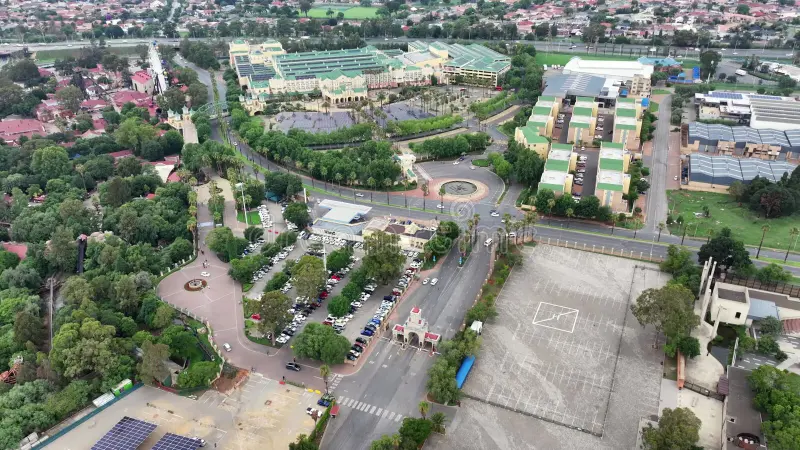
Free parking lot shared with Gold Reef City; a short walk across the road to the museum entrance.
Get directionsBest time to go, insider tips, nearby landmarks, and the cancellation fine print — flip through to skim what matters to you.
How crowds, weather, and events shift across the year.
Dry, mild Johannesburg winter with low humidity; fewer domestic school-holiday crowds; ideal conditions for walking the outdoor courtyards.
Shoulder season with warm spring days and manageable visitor numbers before the summer holiday surge.
Weekday mornings immediately at opening (09:00) offer the quietest experience with exhibits largely to yourself before tour-group arrivals.
Free entry for South African citizens on this public holiday commemorating the 1976 Soweto Uprising; internationally significant date but busier than a typical Tuesday.
Small details that turn a good visit into a great one.
The apartheid museum's most emotionally demanding galleries — the Political Executions room and Life Under Apartheid — are best experienced without crowds pressing behind you; arriving at opening gives you reflective space.
Group guided tours (for 15+ people) require advance booking and are not available on Mondays; independent visitors with the included audio guide can move at their own pace through all 21 exhibitions.
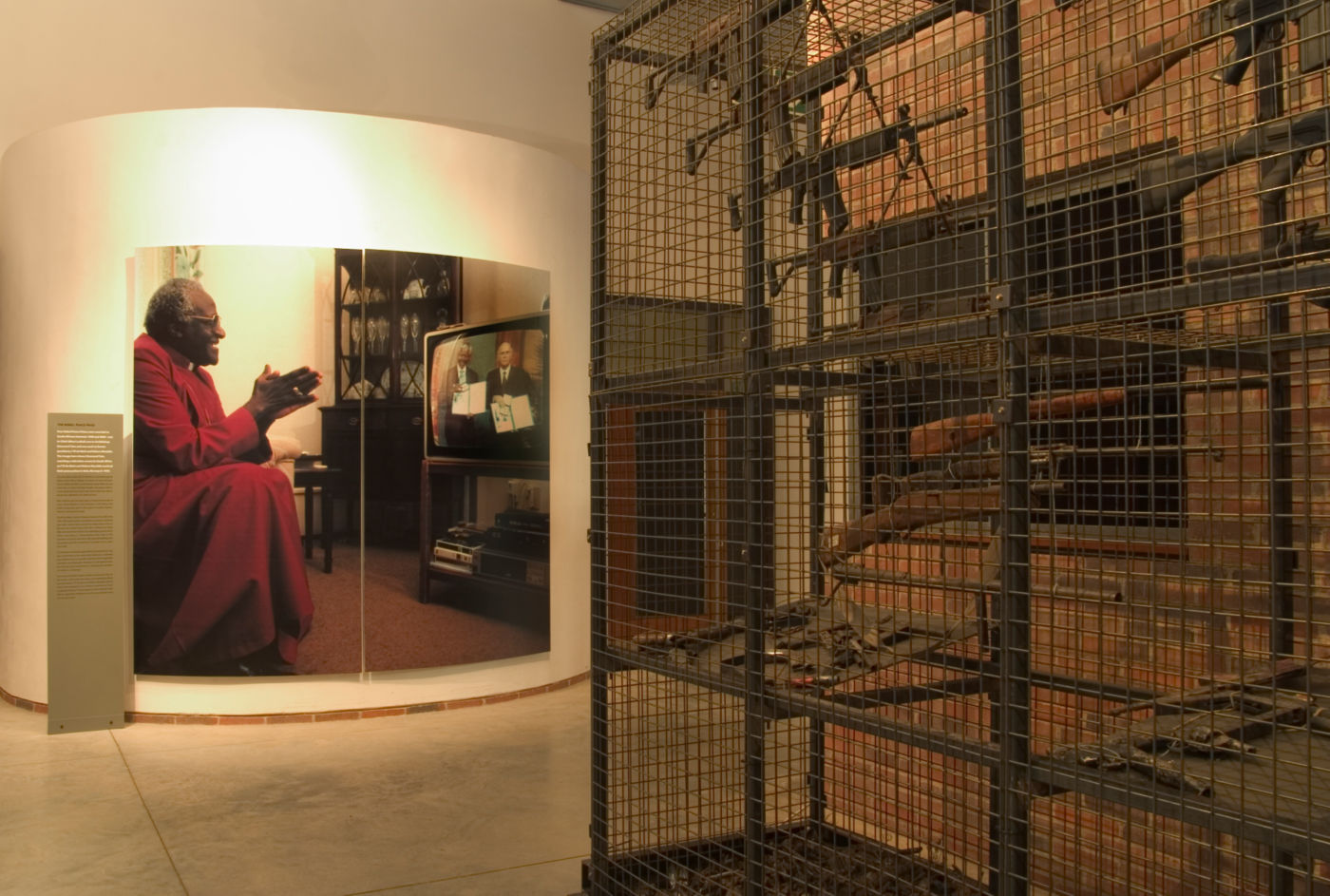
Two hours covers the permanent exhibition in outline; adding the Mandela and Tutu wings, plus the outdoor garden, realistically requires 3–4 hours to absorb the full narrative.
The R240 international admission includes an audio guide; collect it at the ticket desk before passing through the segregated entry gates, as the very first installation already requires contextual commentary.
The Hector Pieterson Museum and Vilakazi Street in Soweto are 15 minutes away by car, and together with the apartheid museum they form the most historically coherent single-day itinerary in Johannesburg.
Free, guarded parking is available in the Gold Reef City lot directly across Northern Parkway; it is safer to leave valuables locked in the boot rather than visible on seats.
Non-bookable sights within a short walk — free to visit, easy to pair.
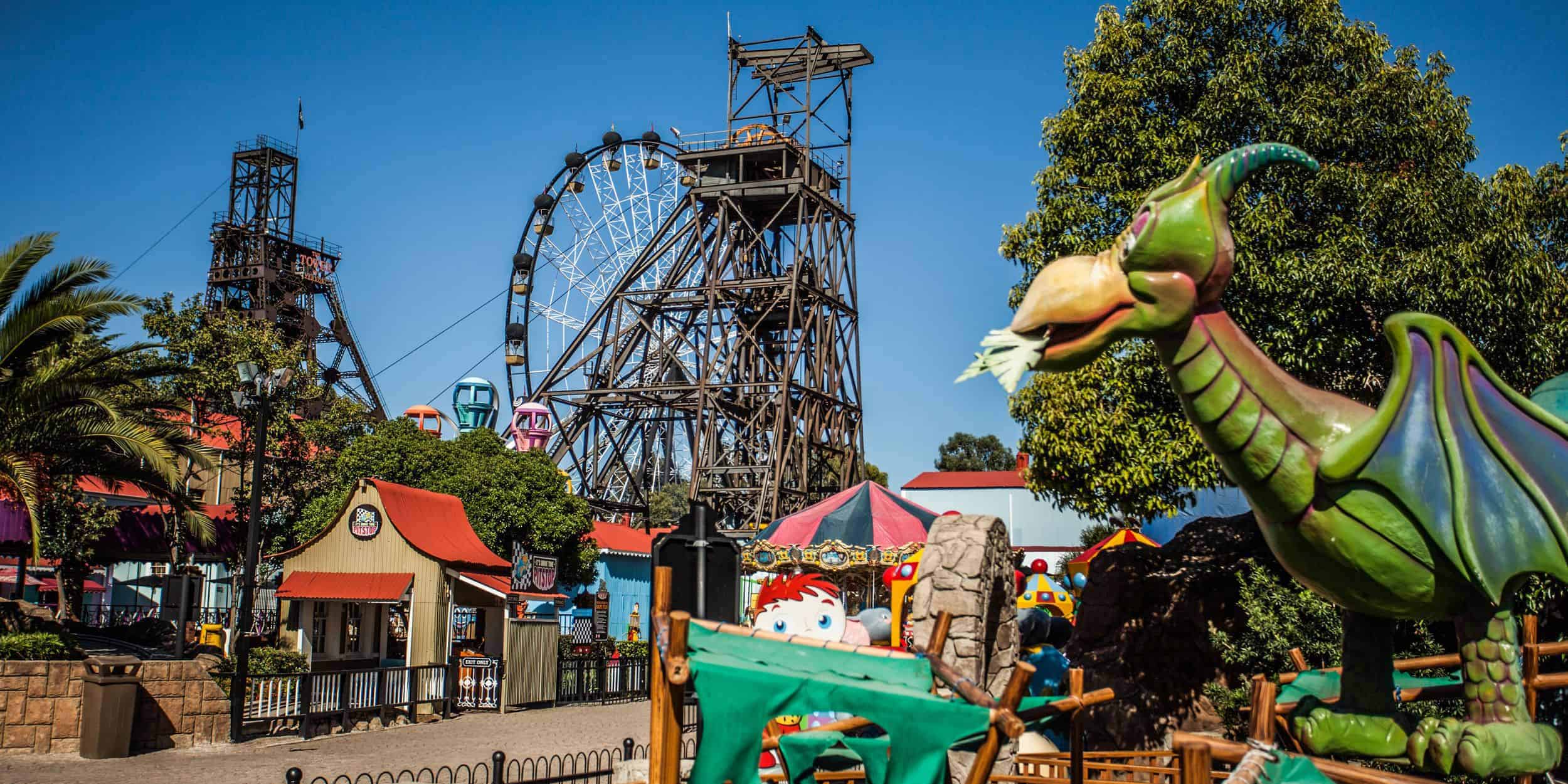
Victorian-era gold-mine theme park built on an actual 19th-century gold reef, with rides, cultural shows, and underground mine tours directly opposite the museum.
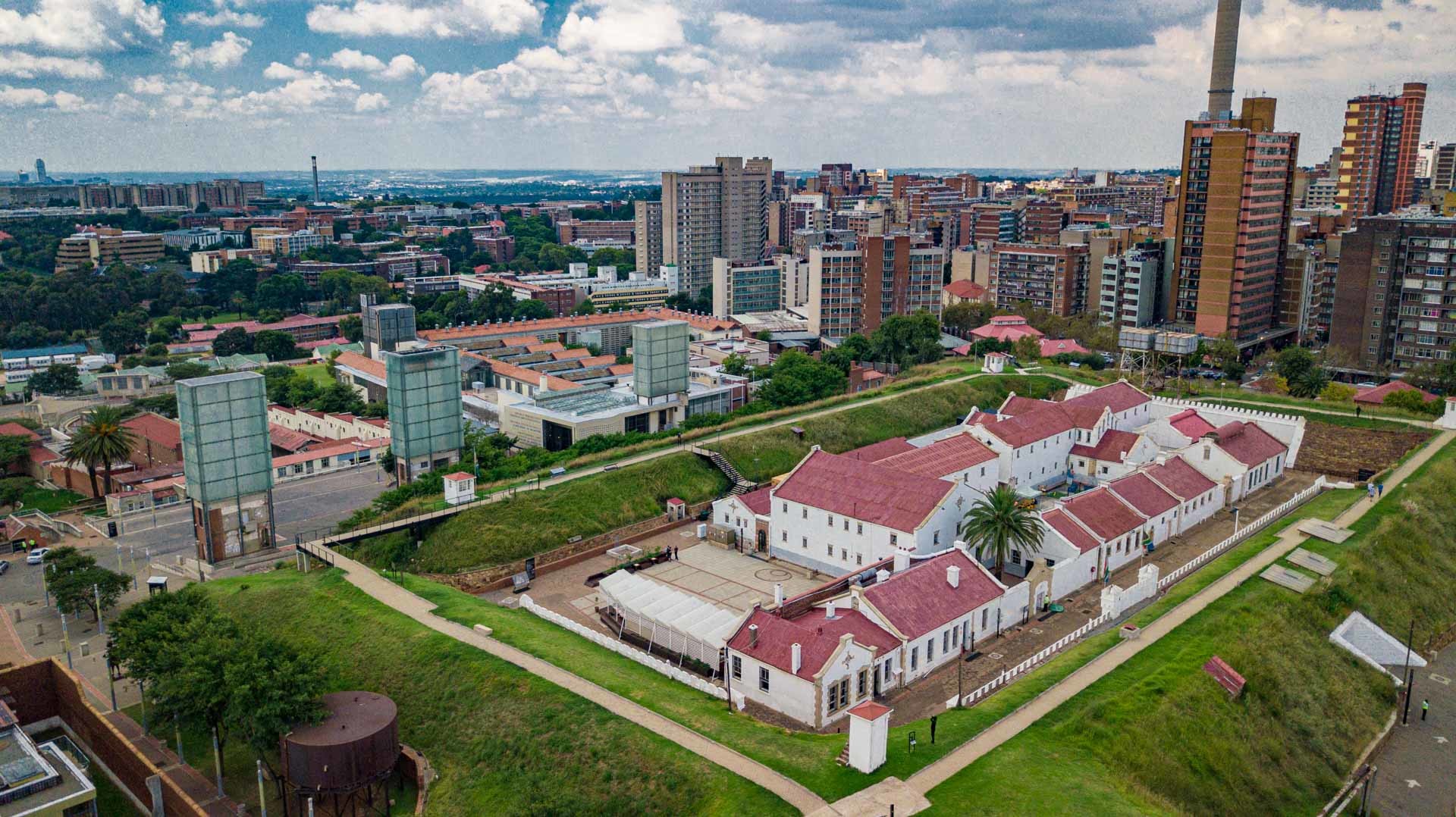
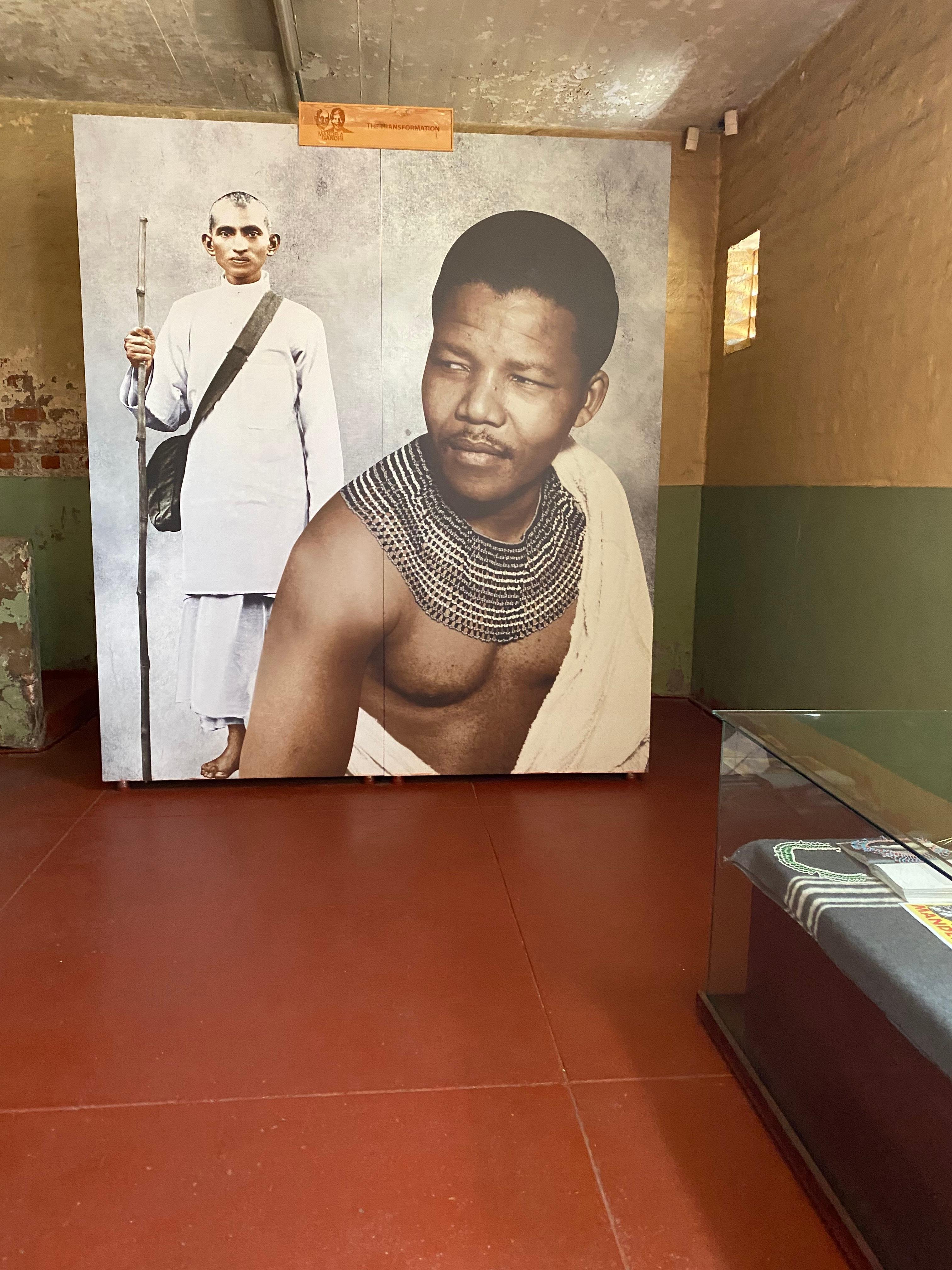
Former prison complex that held Nelson Mandela and Mahatma Gandhi; now houses South Africa's Constitutional Court and a human-rights museum.
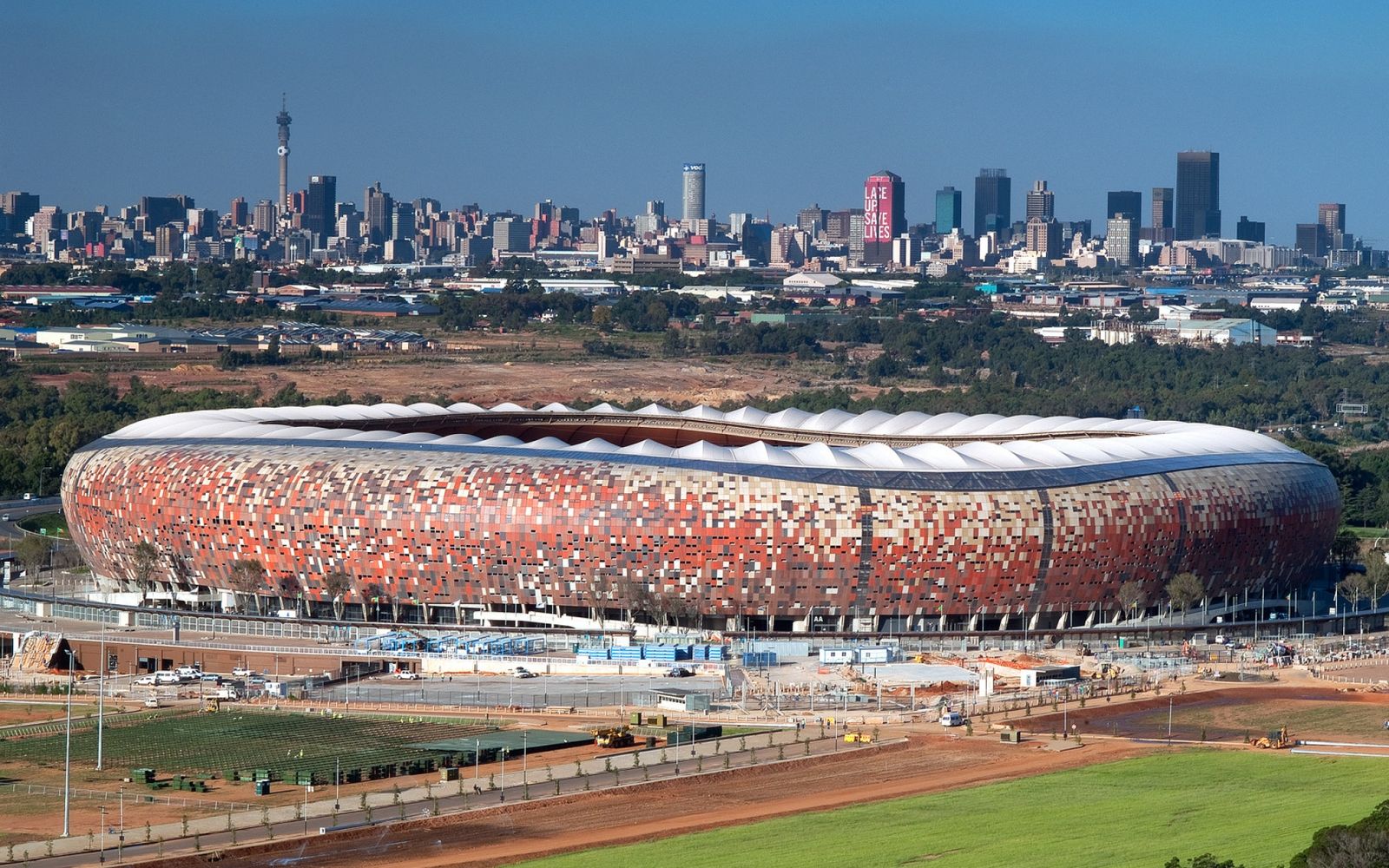
88,000-capacity stadium shaped like an African calabash; venue for the 2010 FIFA World Cup final, located in Nasrec adjacent to Soweto.
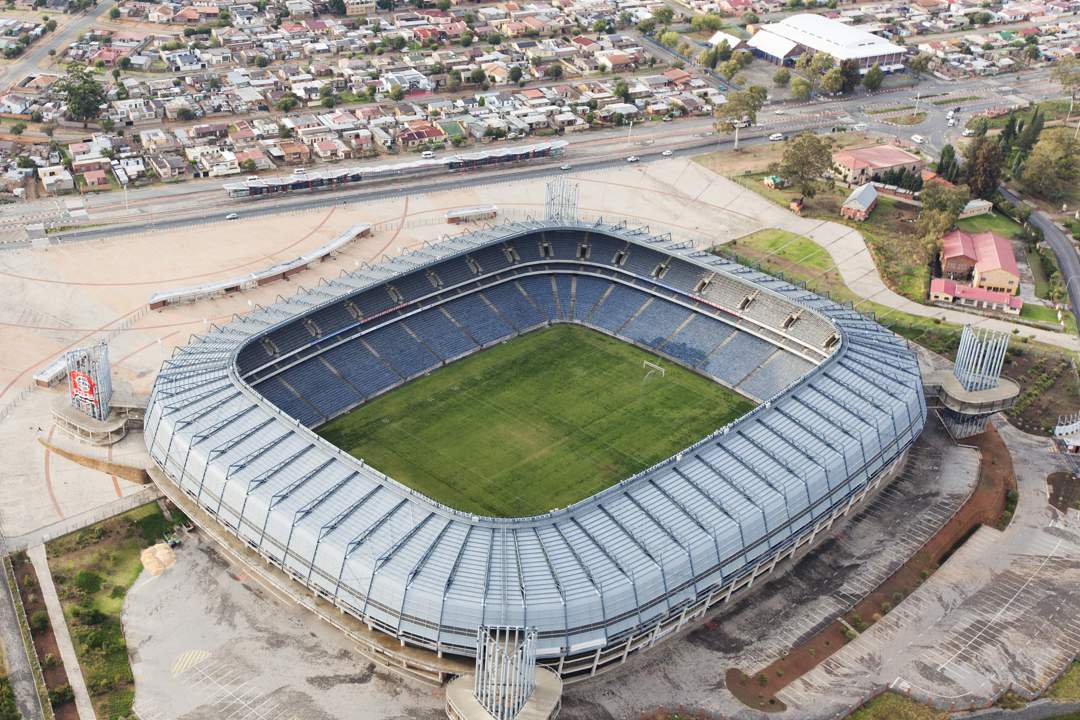
Historic Soweto landmark and football ground at the edge of the Soweto township, offering context to the apartheid-era forced removals story.
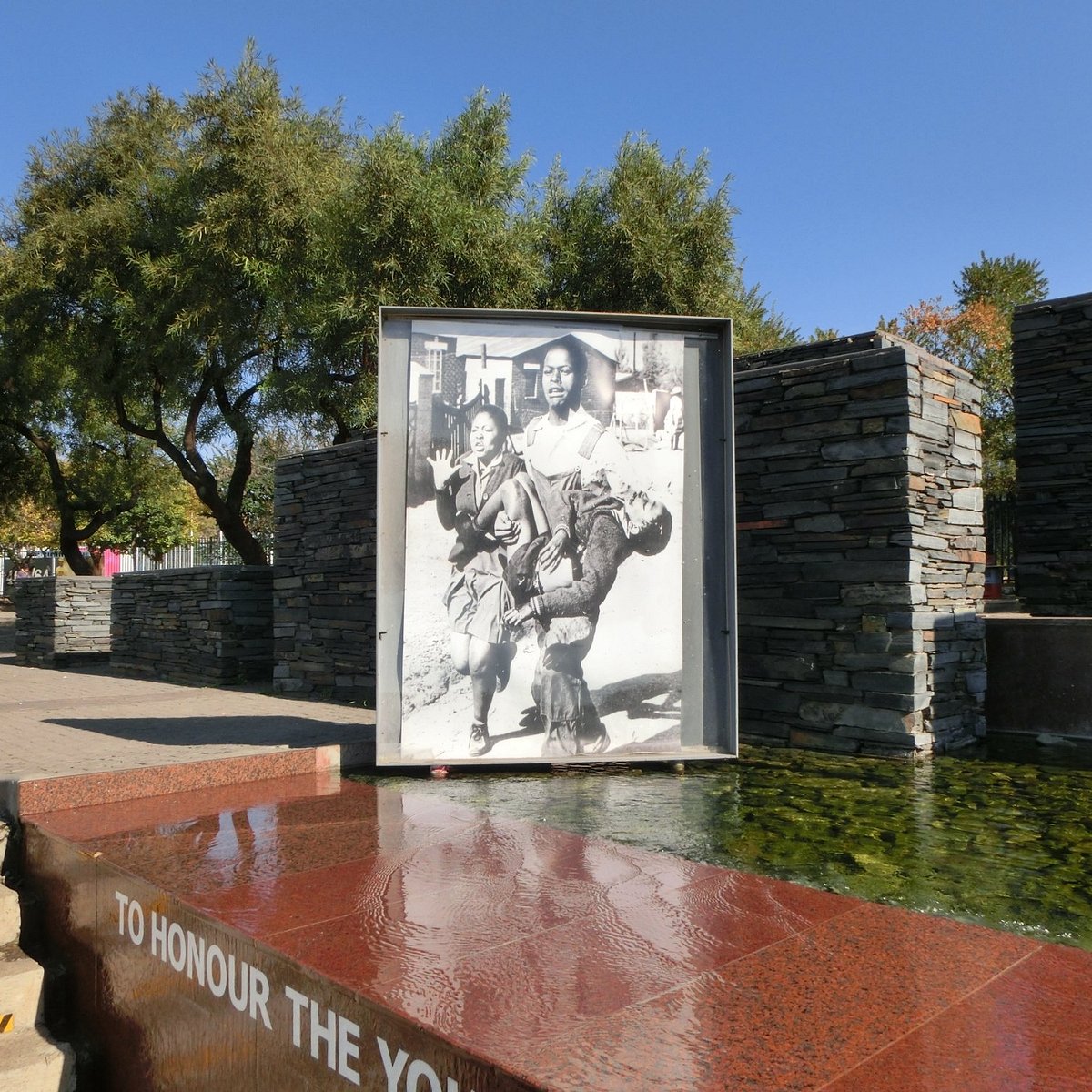
Museum in Soweto dedicated to the 1976 student uprising, named after the first child killed during the protests; a natural same-day pairing with a Johannesburg historical tour.
Flexible, no hidden fees.
Tickets purchased at the door are non-refundable once entry has been made. For advance bookings through Webtickets, cancellations made more than 24 hours before the visit date are eligible for a full refund of the R240 international adult admission; cancellations within 24 hours are non-refundable.
Hand-picked options within walking distance — pick a district for vibe, or a specific hotel for convenience.
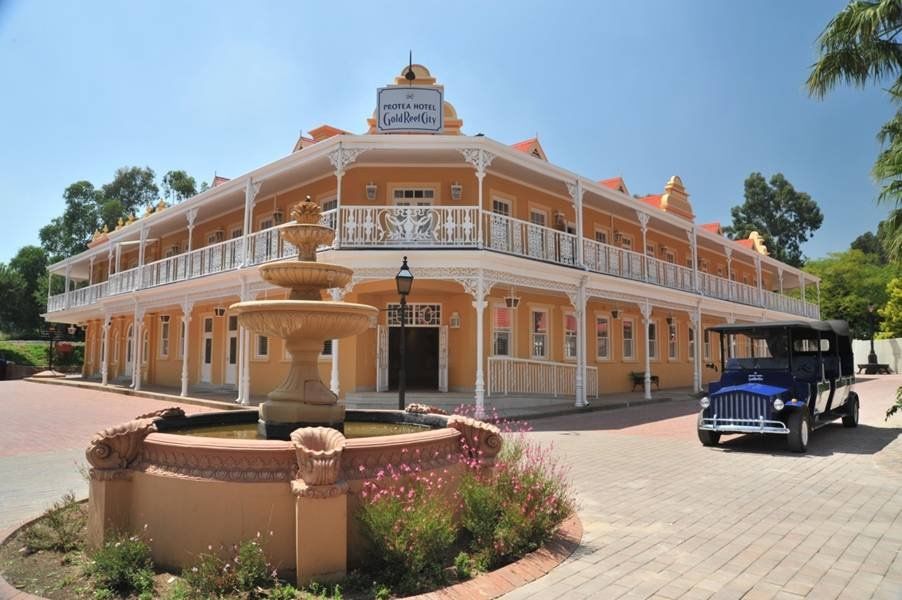
Adjacent to both the museum and the theme park; guests benefit from direct walking access and a package rate that sometimes includes museum entry.
Boutique property 1.4 km from the museum in the Johannesburg South area, with secure parking and a garden setting.
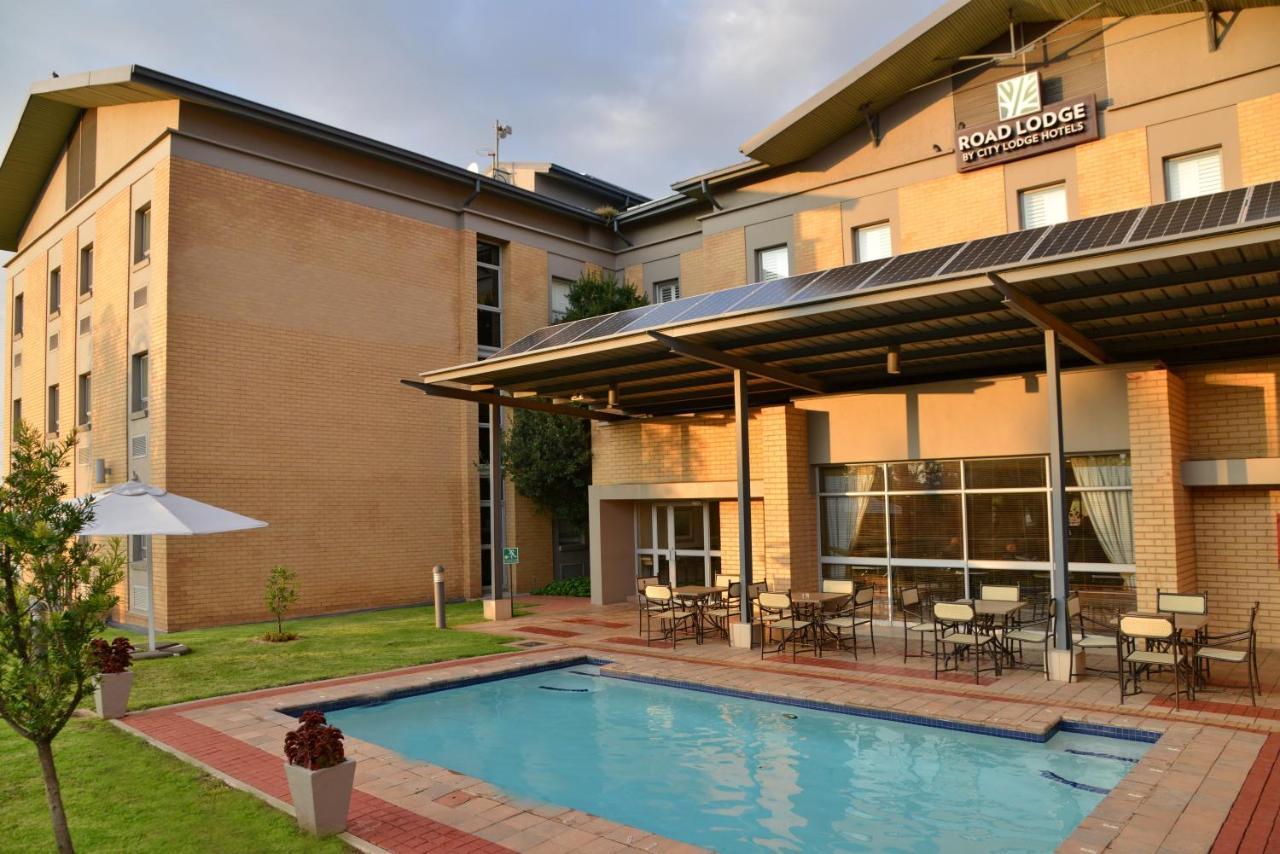
Value-priced road lodge 4.5 km away near Southgate Mall; straightforward amenities and easy highway access back to the museum.
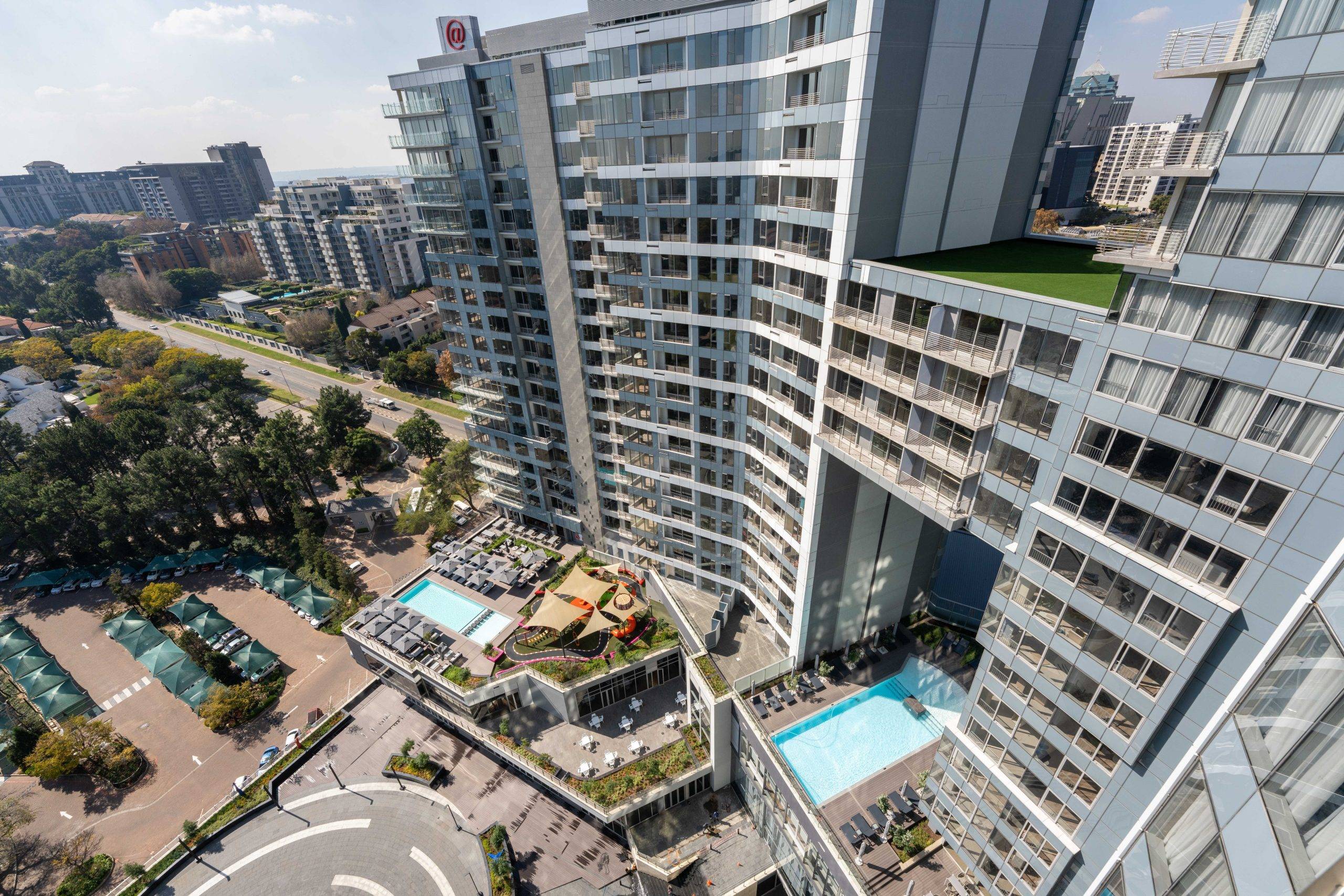
Sandton offers the widest selection of international luxury and boutique hotels in greater Johannesburg, including the Michelangelo and Saxon, for travellers combining a museum visit with business or shopping.
The apartheid museum is open Tuesday through Sunday from 09:00 to 17:00. It is closed every Monday, on Good Friday, on Christmas Day, and on New Year's Day. On 16 June (Youth Day), South African citizens receive free entry.
International adult admission to the apartheid museum is R240.00, effective from 1 May 2026, and includes an audio guide. Concession rates apply for students, pensioners, and children with valid identification.
Yes, the museum is closed every Monday. Plan your Johannesburg sightseeing itinerary accordingly and arrive on a Tuesday through Sunday between 09:00 and 17:00.
The quietest time to visit the apartheid museum is on a Tuesday, Wednesday, or Thursday morning immediately at opening (09:00). Weekends and South African school holidays attract significantly larger numbers of visitors, including organised school groups.
Guided tours of the apartheid museum are available for pre-booked groups of 15 or more people at a supplementary fee above standard admission; they are not available on Mondays. Independent visitors receive an audio guide with their R240 ticket and are free to explore the 21 exhibitions at their own pace.
The apartheid museum is fully wheelchair accessible, with ramps, lifts, and accessible restrooms throughout all gallery levels. Visitors requiring additional assistance can call +27115309470 ahead of their visit.
Photography for personal, non-commercial use is permitted in designated areas; flash photography and tripods are prohibited, and certain archival screens and sensitive panels display 'no photography' signage that must be respected.
Visitors to this Johannesburg historical site should not bring large backpacks, food or beverages for inside the galleries, tripods, selfie sticks, alcohol, weapons, or drones. There is no left-luggage storage, so leave oversized bags at your accommodation.
The museum itself recommends that its content is not suitable for children under 11 due to graphic imagery and archival footage depicting violence. Children aged 11 and above generally engage well with the material, particularly with parental guidance and the included audio tour.
A café on site serves light meals, snacks, and hot drinks before or after your apartheid museum tour. Food and drinks cannot be taken into the gallery spaces. Gold Reef City theme park, directly across Northern Parkway, offers a broader range of dining options.
Take the Rea Vaya BRT bus from Park Station towards Southgate and alight at the Gold Reef City stop, then walk approximately 10 minutes to the museum entrance. Alternatively, the hop-on hop-off City Sightseeing Red City Tour stops directly at the museum (Stop 14). Uber and metered taxis are the fastest and most convenient option, taking 7–15 minutes from central Johannesburg.
The most historically complementary combination is a South Africa apartheid tour that pairs the museum with the Hector Pieterson Museum in Soweto (15 minutes by car) and Constitution Hill in Braamfontein (15 minutes by car). Gold Reef City theme park is directly across the road for a contrasting afternoon activity.